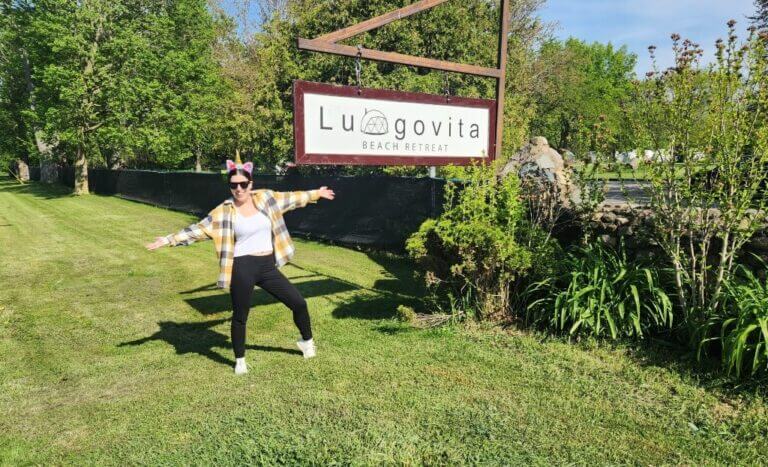
Is The Saguenay-Lac-Saint-Jean Region Of Quebec Worth Visiting?



***This blog post is based on a 4-day press trip hosted by Saguenay-Lac-Saint-Jean; however, all the opinions are my own.
Wondering If The Saguenay-Lac-Saint-Jean Region Of Quebec Is Worth Visiting In 2025? We’ve Got You Covered!
So is the Saguenay-Lac-Saint-Jean region of Quebec worth visiting?
If you’re dreaming of wide-open spaces, breathtaking fjords, charming villages, and rich Québécois culture, the Saguenay–Lac-Saint-Jean region might just be your perfect escape.
Tucked away in northeastern Quebec, this lesser-known gem offers stunning natural landscapes, outdoor adventures year-round, and warm, welcoming locals.
But is it really worth the trip? In this blog post, we’ll explore what makes Saguenay-Lac-Saint-Jean so unique and whether it deserves a spot on your bucket list.
I had the opportunity to spend 4 days exploring Saguenay-Lac-Saint-Jean and will share my best tips and recommendations with you.
Recommended Resources:
✈️ Cheapest Flights
🏢 Hotels
🏡 Cottage & Vacation Rentals
🚵🏼♀️ Tours
🚘 Car Rental
🩹 Travel Insurance
💧 Water Bottle
Is The Saguenay-Lac-Saint-Jean Region Of Quebec Worth Visiting?
The short answer is yes! Absolutely!
The Saguenay–Lac-Saint-Jean region is one of Quebec’s best-kept secrets.
Nestled around a massive lake and a dramatic fjord, this area is a paradise for nature lovers, outdoor adventurers, and cultural explorers alike.
From kayaking through the Saguenay Fjord and spotting beluga whales, to biking the famous Véloroute des Bleuets and diving into Indigenous and French-Canadian heritage, there’s truly something for everyone.
What sets it apart is its mix of breathtaking landscapes, authentic small-town charm, and a pace of life that invites you to slow down and take it all in.
Whether you’re planning a summer road trip or a cozy winter getaway, Saguenay-Lac-Saint-Jean is more than worth visiting—it’s a destination that leaves a lasting impression.
Where Is Saguenay-Lac-Saint-Jean Located?
Saguenay-Lac-Saint-Jean is located in central Quebec, Canada, about 200 km (125 miles) north of Quebec City.
The region is centered around Lac-Saint-Jean, a large, circular lake, and the Saguenay River, which flows from the lake through a deep fjord to the St. Lawrence River.
Despite its remote feel, the region is accessible by car, bus, or even regional flights.
What Is The Best Time To Visit Saguenay-Lac-Saint-Jean?
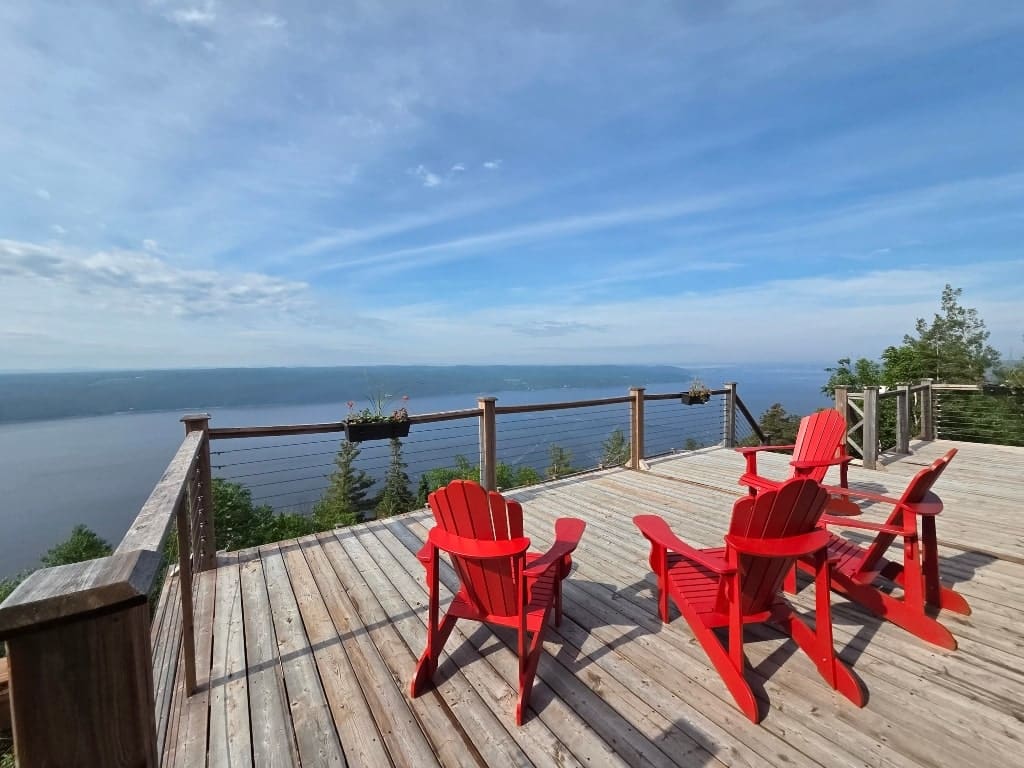
The best time to visit Saguenay-Lac-Saint-Jean depends on what kind of experience you’re looking for.
However, most travelers prefer to visit the region from late June to early September.
During the summer, the weather is warm and pleasant—perfect for exploring the stunning Saguenay Fjord or cycling the Véloroute des Bleuets.
If you prefer fall foliage and fewer crowds, September to early October offers crisp air and gorgeous autumn colours.
For winter lovers, December to March is ideal for snowmobiling, skiing, and ice fishing, as the region transforms into a snowy playground.
Things To Do In Saguenay-Lac-Saint-Jean?
Let’s take a look at some of the best things to do in the Saguenay-Lac-Saint-Jean region of Quebec.
1. Explore the Saguenay Fjord
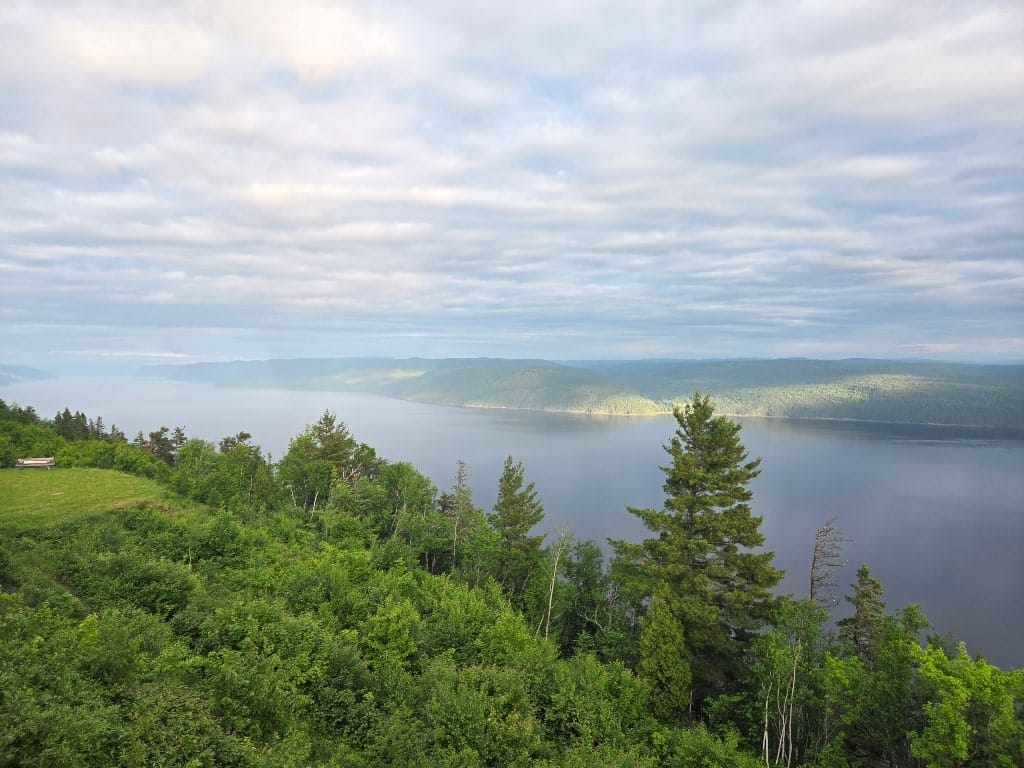
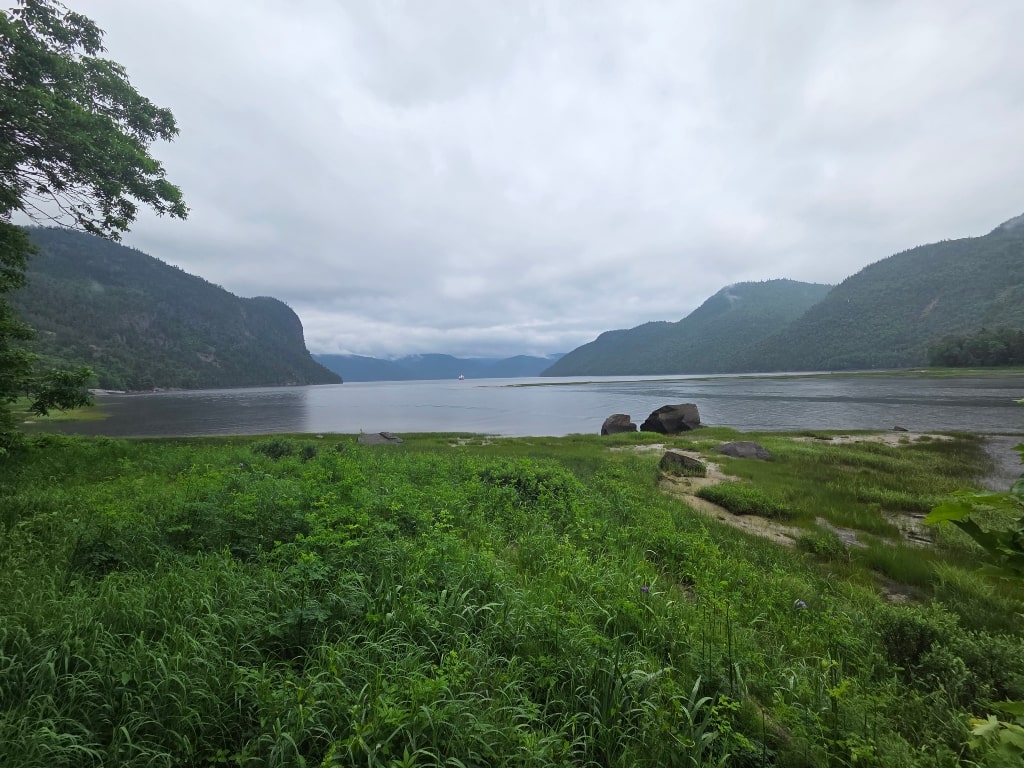
The Saguenay Fjord is one of the most striking natural features in all of Quebec and one of the longest fjords in the world.
Carved by glaciers during the last Ice Age, this deep, narrow waterway stretches for over 100 kilometers, flanked by towering cliffs that soar up to 350 meters high.
Unlike typical fjords that open directly to the sea, the Saguenay Fjord flows from the Saguenay River into the St. Lawrence River.
There are countless ways to experience the fjord.
For outdoor lovers, Parc National du Fjord-du-Saguenay offers spectacular hiking trails with sweeping views from lookouts like Cap-Trinité and Cap-Éternité.
If you’re not into hiking, kayaking on the fjord is a bucket-list experience.
You can kayak solo or go for a guided tour. They allow you to glide past waterfalls, wildlife, and sheer rock faces in total tranquility.
Also, you can explore the fjord by zodiac or boat tour, which often includes commentary about the geological history and marine life in the area.
These tours are great opportunities to spot seals, birds, and sometimes even beluga whales, which frequent the nearby Saguenay–St. Lawrence Marine Park.
In the winter, the landscape transforms into a frozen wonderland and activities like snowshoeing or ice fishing take center stage.
👉 Book your kayaking tour: 15 min Tadoussac: Guided Sea Kayaking Adventure
2. Bike the Véloroute des Bleuets
Biking the Véloroute des Bleuets is one of the most iconic cycling experiences in Quebec.
This 256-kilometer loop around Lac-Saint-Jean takes riders through 15 municipalities, the Ilnu community of Mashteuiatsh, and a rich variety of landscapes—from blueberry fields and forested trails to lakefront villages and cultural landmarks.
About half the route consists of paved bike paths, while the rest follows quiet, cyclist-friendly roads with just one short, well-maintained gravel section in Pointe-Taillon National Park.
The trail is well-equipped with cyclist services, including rest stops, repair stations, bike-friendly lodging, and even e-bike charging stations.
Also, during the summer, volunteer ambassadors patrol the route to offer assistance, and luggage shuttle services make multi-day rides a breeze.
Along the way, you can stop to sample fresh blueberries, tour local cheese shops, visit attractions and relax on the many beaches.
We biked a part of the trail using e-bikes provided by Equinox Aventure (see below), and it was so much fun.

3. Visit Zoo Sauvage de Saint-Félicien
The Zoo Sauvage de Saint‑Félicien offers a truly immersive and unforgettable wildlife experience.
It is set within a 485‑hectare park that seamlessly blends conservation and education.
You begin your visit with a one‑hour ride aboard a caged train through the Nature Trail Park.
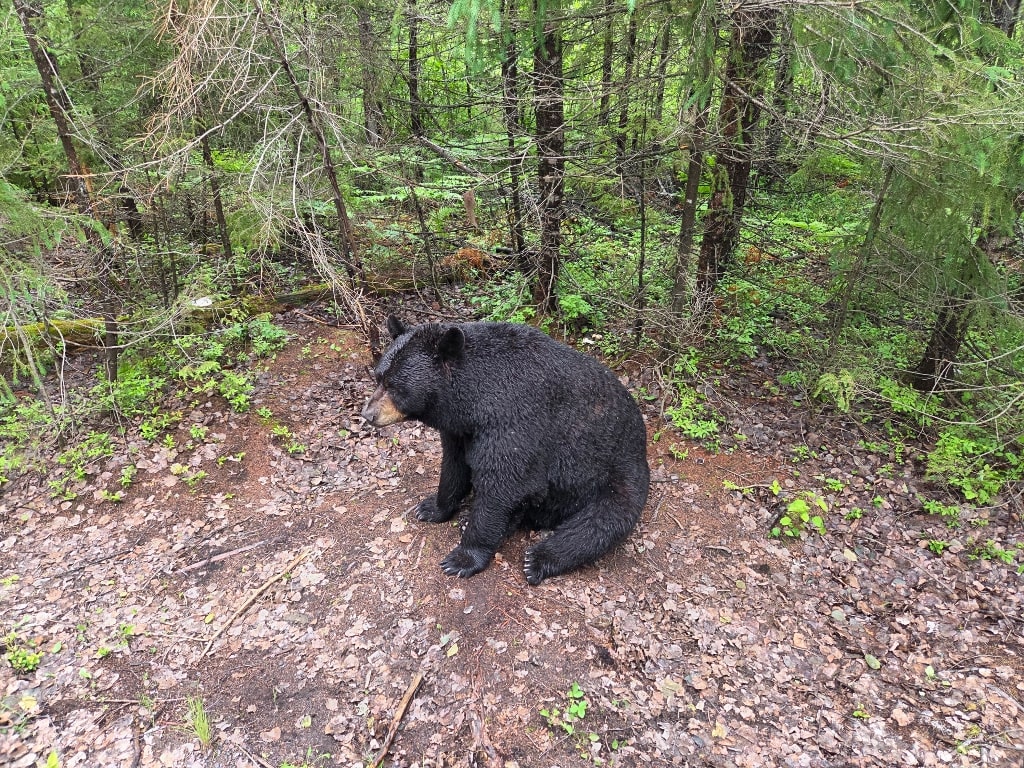
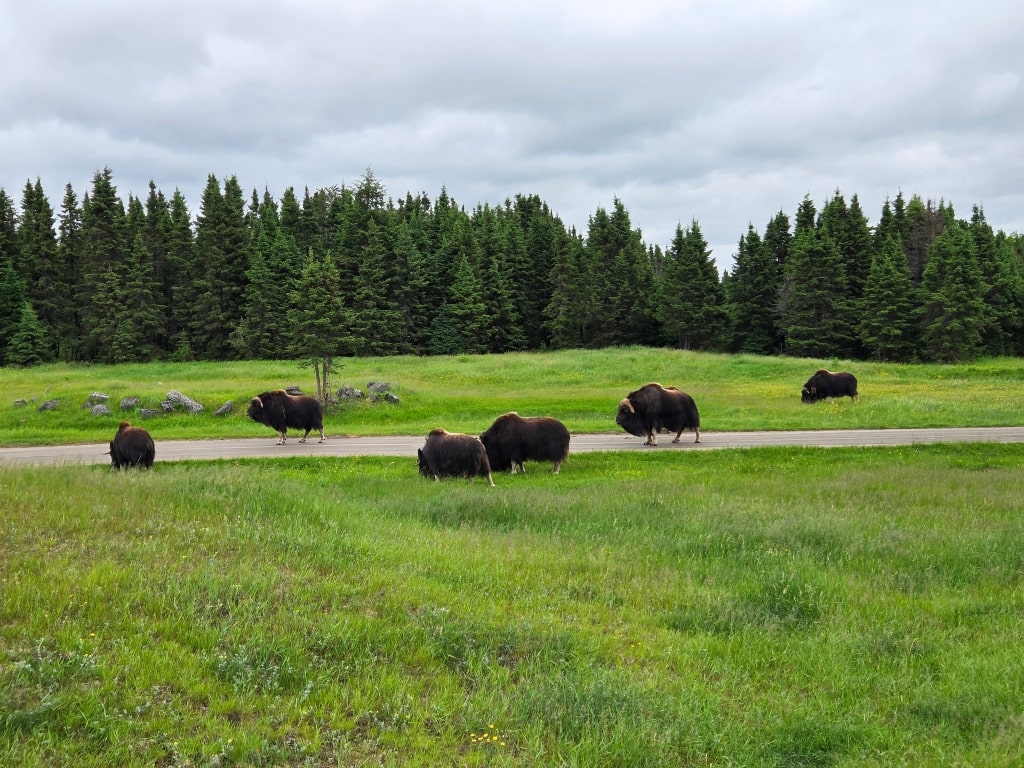
Where large mammals like bison, caribou, elk, musk‑ox, and black bears roam freely alongside the historic recreations of logging camps and early settler life.
After the train, a 4.5‑km walking trail guides you through six distinct ecosystems, from the Arctic and Mongolian steppe to Eastern Asian forests.
Allowing visitors to explore habitats of Amur tigers, Japanese macaques, red pandas, polar bears, wolves, lynx, beavers, and wolverines.
Throughout the day, engaging feeding sessions and talks by naturalist guides create opportunities to learn about animal behaviour.
With over 1,000 animals and 80 species, the zoo is focusing on boreal and cold‑region fauna.
Most visitors spend 4–5 hours at the zoo, making it a full‑day adventure that appeals to both kids and adults.
It was great to learn more about these beautiful animals, and you can tell that the staff took really good care of them.
Also, many of the animals were rescued and now live in the zoo as part of conservation and rehabilitation efforts.
👉 Get your admission ticket here: Saint Felicien: Admission to Zoo Sauvage
🎥 Here are some videos that I took while visiting the Zoo Sauvage de Saint-Félicien.
Otters
Prairie Dogs
Reindeer
There are more videos on my YouTube channel
4. Taste Local Blueberry Products
Saguenay-Lac‑Saint‑Jean is synonymous with blueberries, known locally as bleuets, which dominate the region’s agricultural scene.
The region produces around 23 million kg of wild berries each summer and has been referred to as the “world capital of blueberries”.
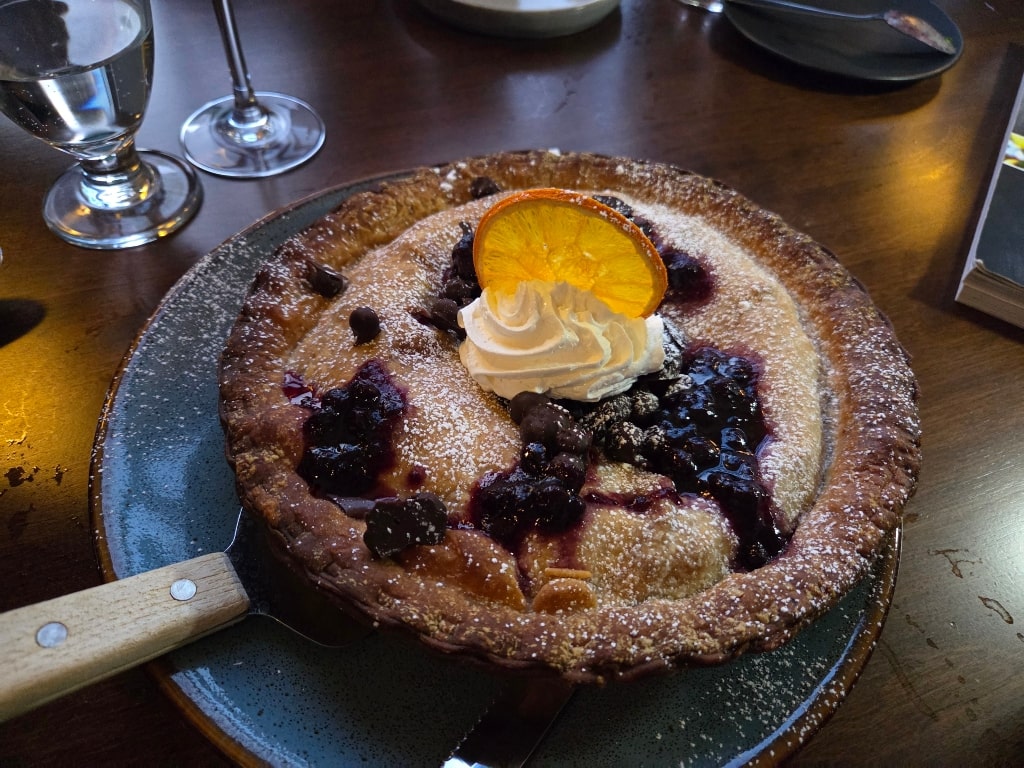
We had the opportunity to taste some of the delicious products that Délices du Lac Saint-Jean had, and they were soooo good!
Délices du Lac Saint Jean is a family-run Economusée that celebrates the region’s iconic wild blueberry through small-batch production of jams, jellies, syrups, chutneys, and pies.
Also, visitors can tour the jam-making process, learn about the berry’s history and sustainable cultivation, and sample products, many made with locally sourced ingredients.
Finally, if you’re visiting in early August, time your trip with the Festival du Bleuet in Dolbeau‑Mistassini.
It is a five-day summer celebration featuring giant blueberry pie tastings, artisan stalls, live music, and family-friendly contests celebrating the berry’s cultural importance.

5. Tour the Historic Village of Val‑Jalbert
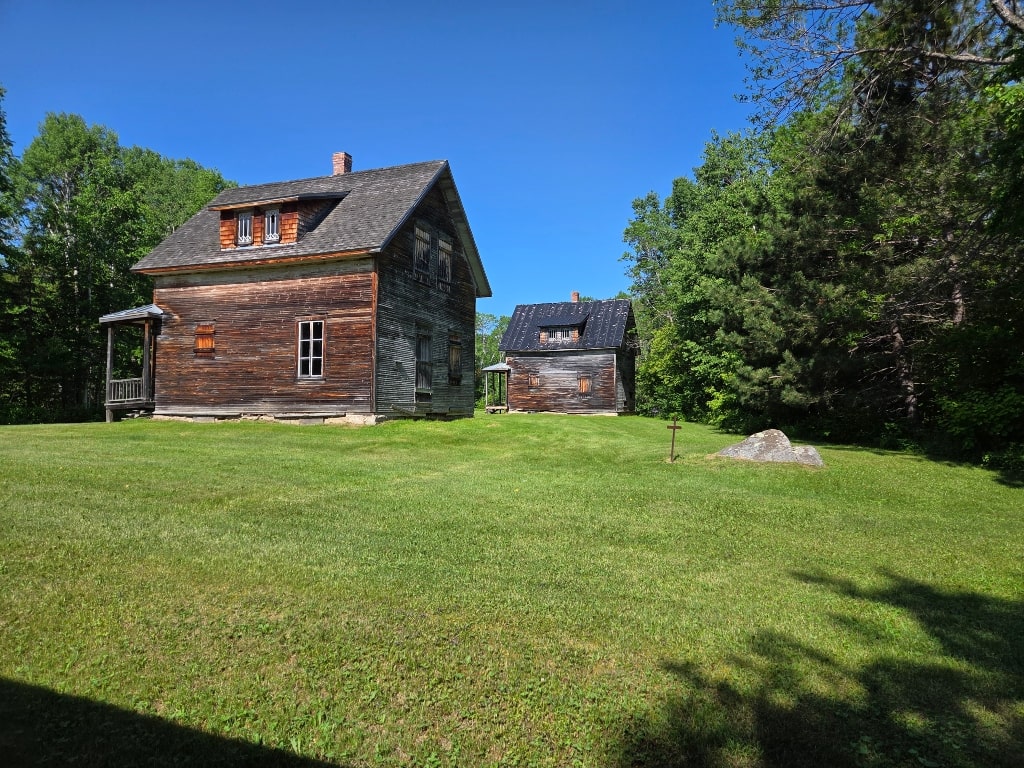
Nestled beside the stunning Ouiatchouan Falls, Val‑Jalbert is a well-preserved early 20th-century company town.
It tells the story of industrial ambition, community life, and sudden abandonment.
Founded in 1901 around a pulp mill, it quickly grew into a modern village complete with electricity, running water, a convent school, a general store, and workers’ homes.
By 1927, as the mill closed, the deeply connected community dwindled and eventually turned into a ghost town.
Today, Val‑Jalbert is an open-air museum where visitors can see its original streets and buildings, guided by costumed interpreters who share stories of daily life, work, faith, and family in the 1920s.
Also, a trolleybus tour and self-guided walking trails bring you face-to-face with over 20 historic sites.
The star of the town is the 72 m‑high Ouiatchouan Falls, which dwarfs Niagara and is best seen via a panoramic cable car or the thrilling glass lookout platform.
In addition, you can watch a stunning multi‑sensory mill show in the old grinding room.
Visitors can stay overnight in a restored 1920s house with all modern amenities, enjoy local food at Restaurant du Moulin, and experience the village at night when you can see the Ouiatchouan Falls illuminated with vibrant colors.
6. Spot Beluga Whales in the Saguenay-St. Lawrence Marine Park
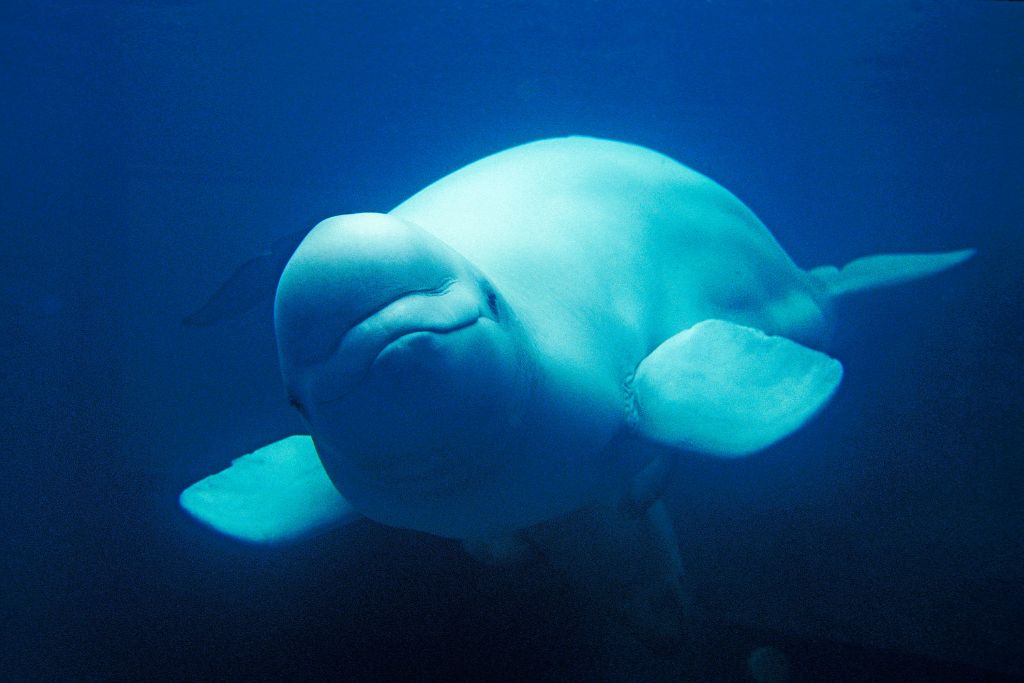
Sightings of beluga whales in the Saguenay-St. Lawrence Marine Park are one of the region’s most captivating wildlife experiences.
This protected area, where the Saguenay River meets the St. Lawrence Estuary, creates nutrient-rich upwellings that attract diverse whale species—including the iconic St. Lawrence beluga.
Belugas are present in the fjord throughout summer, but peak viewing occurs from July to October when their calves are born and feeding areas are abundant.
Also, you can join a boat or zodiac tour from places like Tadoussac or Baie-Sainte-Catherine.
Where expert guides provide insight into whale behavior and marine ecology.
For a more peaceful and intimate adventure, kayaking tours allow you to silently glide through the fjord, sometimes with belugas surfacing nearby.
If you’d rather stay on land, there are excellent viewing spots at places like Cap-de-Bon-Désir.
Observing belugas here isn’t just beautiful, it’s a rare opportunity to witness one of the most iconic marine mammals in its natural habitat.
👉 Book your tour: 15 min Tadoussac: Guided Sea Kayaking Adventure
7. Experience Indigenous Culture at Mashteuiatsh
Mashteuiatsh is a First Nations community located on the western shore of Lac-Saint-Jean.
It is home to the Pekuakamiulnuatsh people, part of the Innu Nation.
Visiting Mashteuiatsh offers a unique and meaningful look into Indigenous culture in Quebec.
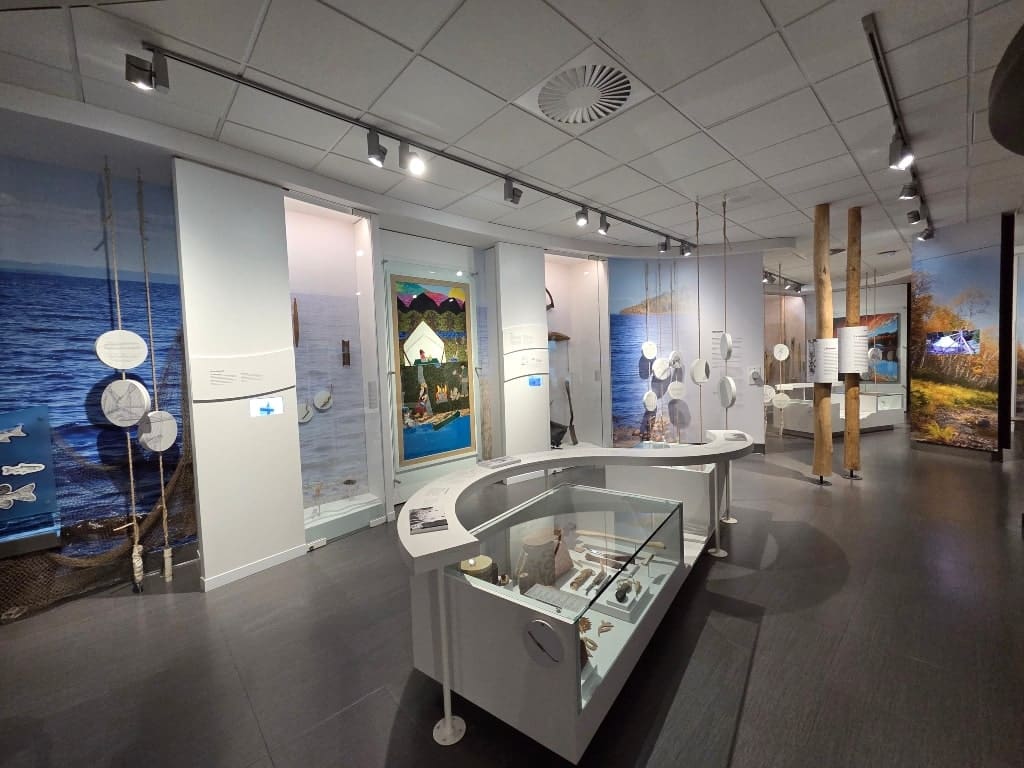
Start at the Musée amérindien de Mashteuiatsh. This museum showcases Innu traditions, history, and beliefs.
You’ll see exhibits on traditional clothing, hunting tools, spiritual practices, and more.
Also, interactive displays and guided tours help bring the stories to life.
Outside the museum, stroll the scenic trail that runs along the lakeshore which features interpretive panels about the Innu connection to the land and water.
In addition, throughout the year, you may find cultural events and workshops. These include storytelling, craft-making, and music demonstrations.
We checked out the museum and also had a traditional dinner with the Indigenous community, celebrating the Summer Solstice.
Also, the same day (June 21) is National Indigenous Peoples Day in Canada, and we had the opportunity to celebrate with them.
🎥 Here are some videos from Musée amérindien de Mashteuiatsh.
Le Musée ilnu de Mashteuiatsh Indigenous Museum Part 1
Le Musée ilnu de Mashteuiatsh Indigenous Museum Part 2
8. Go Hiking in Parc National du Fjord-du-Saguenay
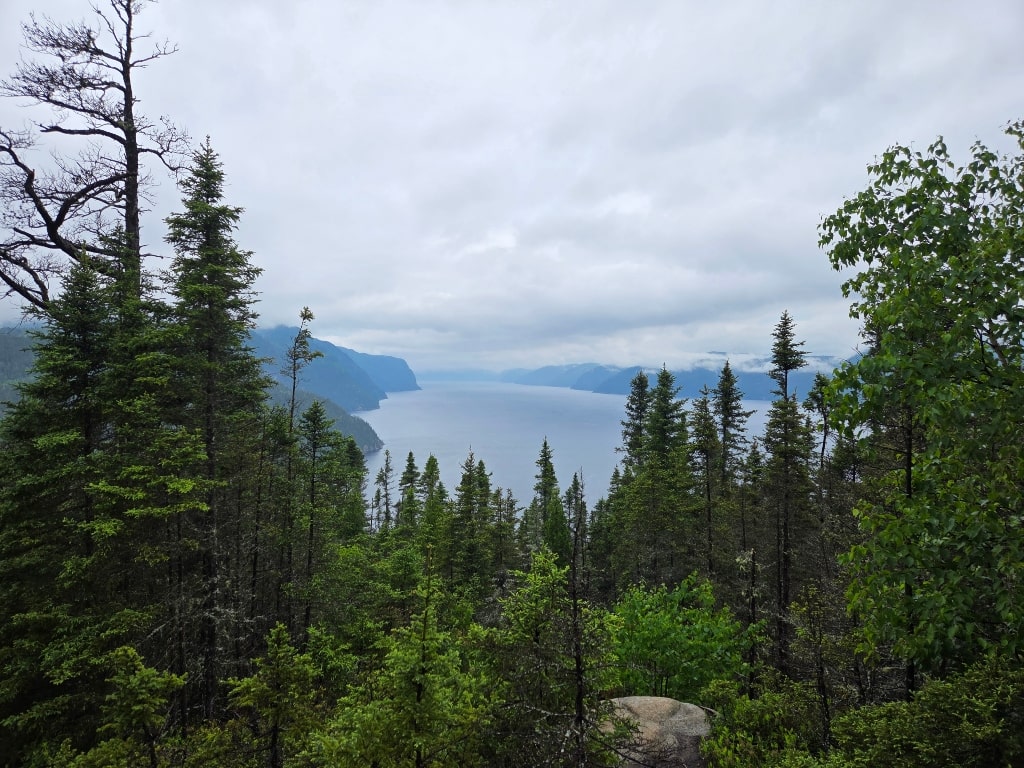
It stretches along the stunning Saguenay Fjord and offers a diverse network of trails. They are suited for all levels, from easy family-friendly paths to challenging multi-day treks.
Start your hike at Baie-Éternité, which is one of the most popular access points. The trails here are well-marked and range from easy to challenging.
One of the most iconic is the Sentier de la Statue. It is a 7.6 km intermediate-to-difficult round-trip that takes you up 280 m to the Notre-Dame-du-Saguenay statue.
Along the way, look out for wildlife. You might spot peregrine falcons, moose, or seals in the water.
No matter which trail you choose, you’ll encounter well-marked paths, interpretive panels, forested terrain, and spectacular overlooks.
Visiting in mid‑June to early October brings dry paths, full services, and star‑studded nights.
While mid‑September offers stunning fall foliage with thinner crowds. In the winter, you can experience snowshoeing and snowmobiling.
Also, bring plenty of water and bug spray, dress in layers, and start early to make the most of your hiking experience.
Parc National du Fjord-du-Saguenay is one of the best ways to truly experience the magic of this region.
🎥 Here are some videos from Parc National du Fjord-du-Saguenay.
L’Anse-de-Tabatière Viewpoint
Parc National Du Fjord-Du-Saguenay
9. Check out Parc Aventures Cap Jaseux
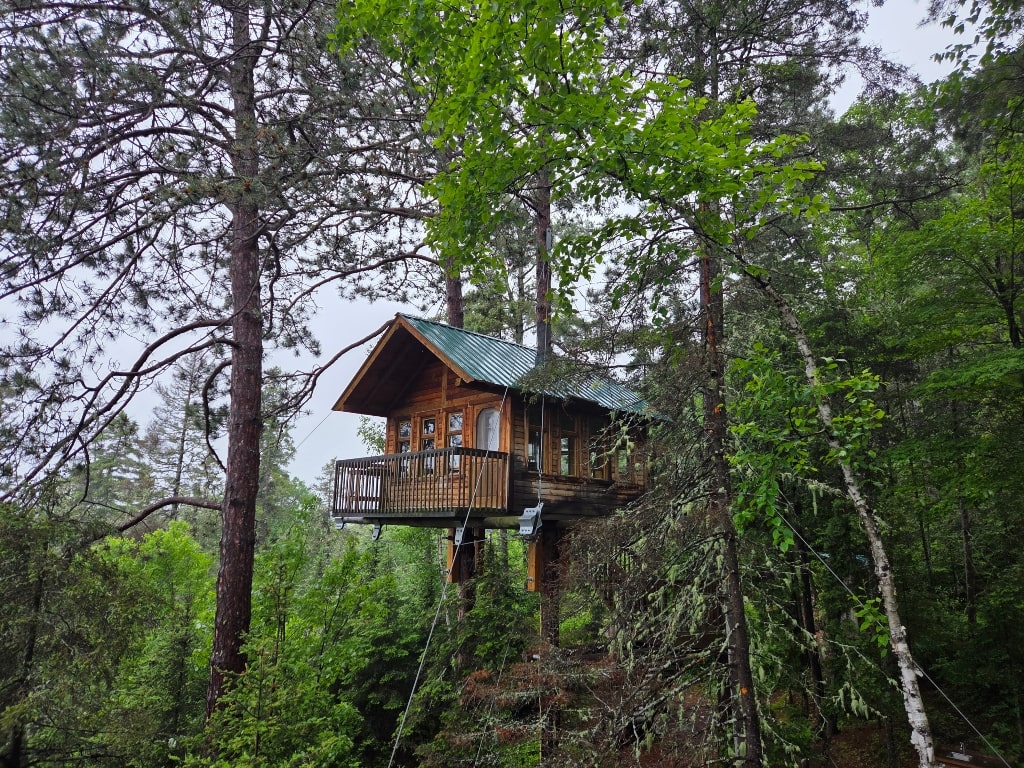
Parc Aventures Cap Jaseux, located in Saint-Fulgence on the shores of the stunning Saguenay Fjord, is a must-visit destination for nature lovers and adventure seekers.
The park offers a wide range of outdoor activities. Including treetop obstacle courses for all ages, a breathtaking via ferrata route overlooking the fjord, scenic hiking trails, and a peaceful beach.
Also, they offer kayaking, wild mushroom picking, massages on the beach, seaplane flights, etc.
For a truly unique stay, the park features one-of-a-kind accommodations such as treehouses, domes, suspended spheres, rustic cabins, and campsites.
Open year-round, Cap Jaseux also offers winter adventures like snowshoeing, ice fishing, and cold weather via ferrata, thanks to recent upgrades that make it a true four-season destination.
It’s the perfect place to experience the Saguenay Fjord in a fun, adventurous, and immersive way.
10. Cruise the Saguenay Fjord
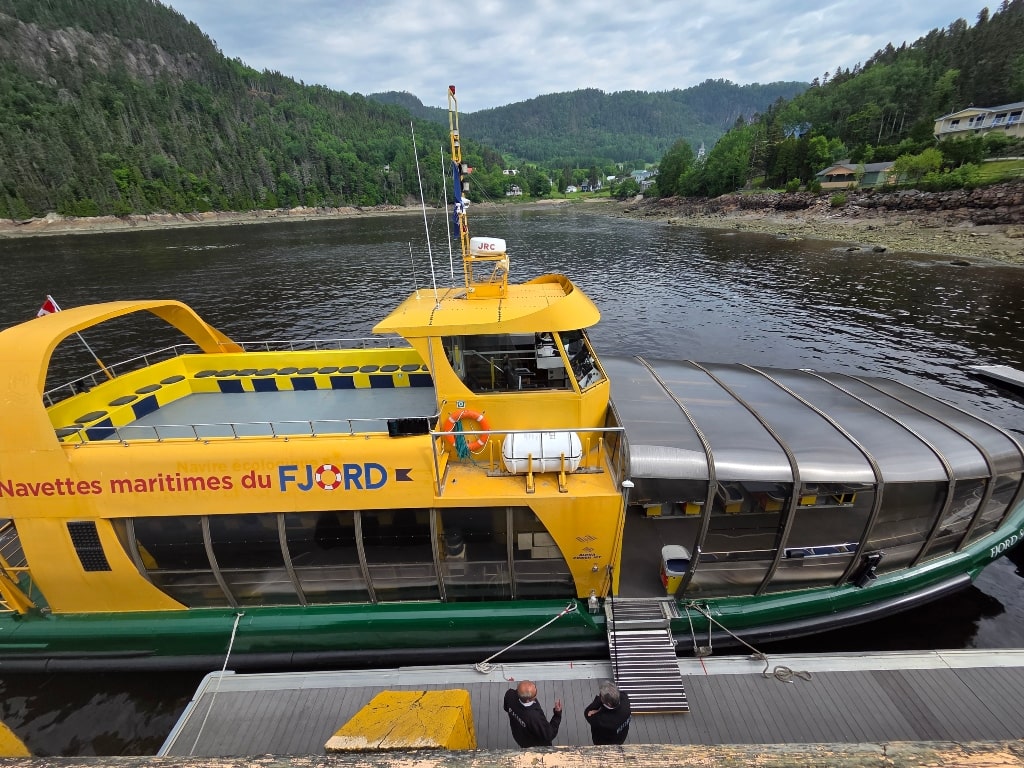
If you take a cruise with Navettes Maritimes du Fjord, you’ll enjoy a unique and scenic journey through the magnificent Saguenay Fjord.
Their vessels include the three-deck Marjolaine, the fully covered with one deck Cap Liberté, and the fully covered main deck, with a sundeck on top of the boat, Fjord Saguenay II.
These boats are ideal for observing the fjord’s steep cliffs and deep blue waters.
In addition, there is fascinating commentary about the geography, history, and communities lining the fjord.
You can choose from a variety of cruise options: non-stop shuttles between villages like La Baie, L’Anse‑Saint‑Jean, and Sainte‑Rose‑du‑Nord.
As well as full-day cruises with guided hikes or minibus tours; or combo trips that include whale-watching near Tadoussac.
Also, these cruises are a convenient way to skip challenging portions of the Véloroute du Fjord by jumping on one of the boats with your bike.
Navettes maritimes du Fjord offers departures from June to early October.
🎥 Here are some videos from our cruise with Navettes Maritimes du Fjord.
On The Water
Inside The Boat
Waterfalls
What Are Some Traditional & Local Foods To Try In Saguenay-Lac-Saint-Jean?
Here are some food items you must try in Saguenay-Lac-Saint-Jean:
Tourtière du Lac-Saint-Jean
A deep-dish meat pie filled with cubes of wild game or pork, potatoes, and onions, all slow-cooked in a flaky crust. It’s a regional specialty and different from the typical Quebec-style tourtière.
Wild Blueberry Desserts
The region is famous for its wild blueberries—try them in pies, tarts, jams, muffins, or even blueberry wine and beer. Late July to mid-August is peak season.
Cretons
A pork spread similar to pâté, typically eaten on toast for breakfast. Common across Quebec, but often homemade in this region.
Cheese from Local Fromageries
Try cheeses from places like Fromagerie Perron or Fromagerie Médard, especially the aged cheddar and artisanal soft cheeses.
Smoked Fish from the Fjord
Look for smoked trout or salmon, caught locally and prepared by regional producers.
Local Craft Beer
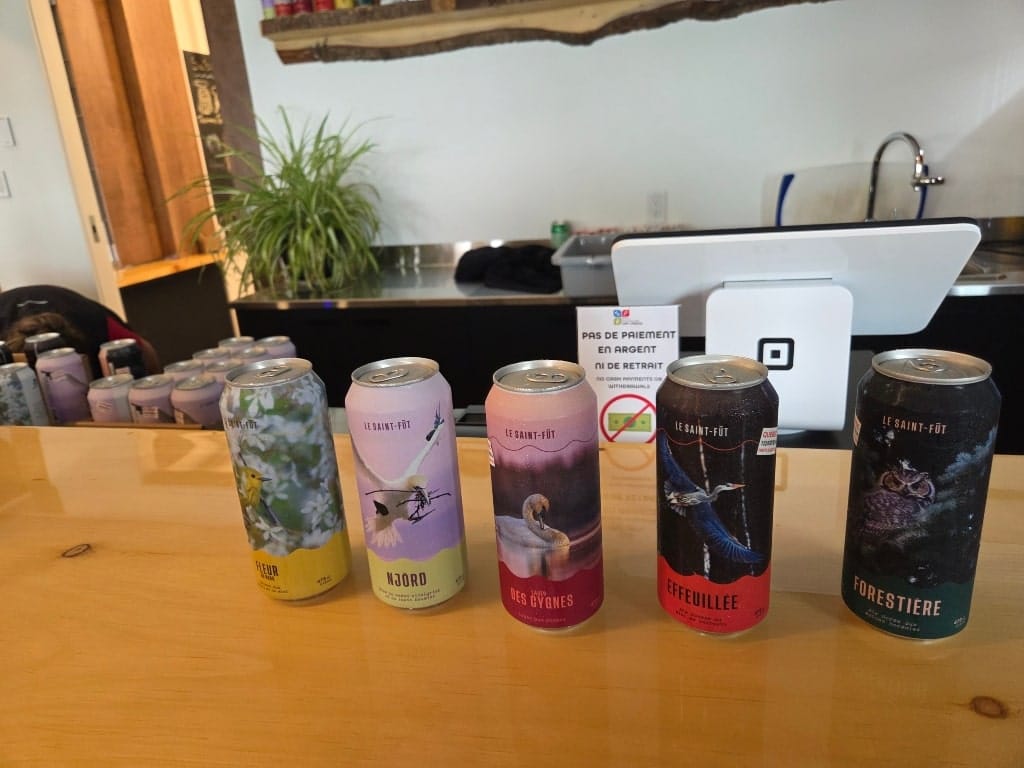
Sample beers from microbreweries like Le Saint Fut Microbrewery or La Chasse-Pinte —some even make blueberry-infused brews.
Tire d’érable (Maple Taffy)
Available at sugar shacks in spring, this classic treat is made by pouring hot maple syrup over snow and rolling it up on a stick.
Where To Stay In The Saguenay-Lac-Saint-Jean Region?
Let’s take a look at where to stay in the Saguenay-Lac-Saint-Jean region of Quebec.
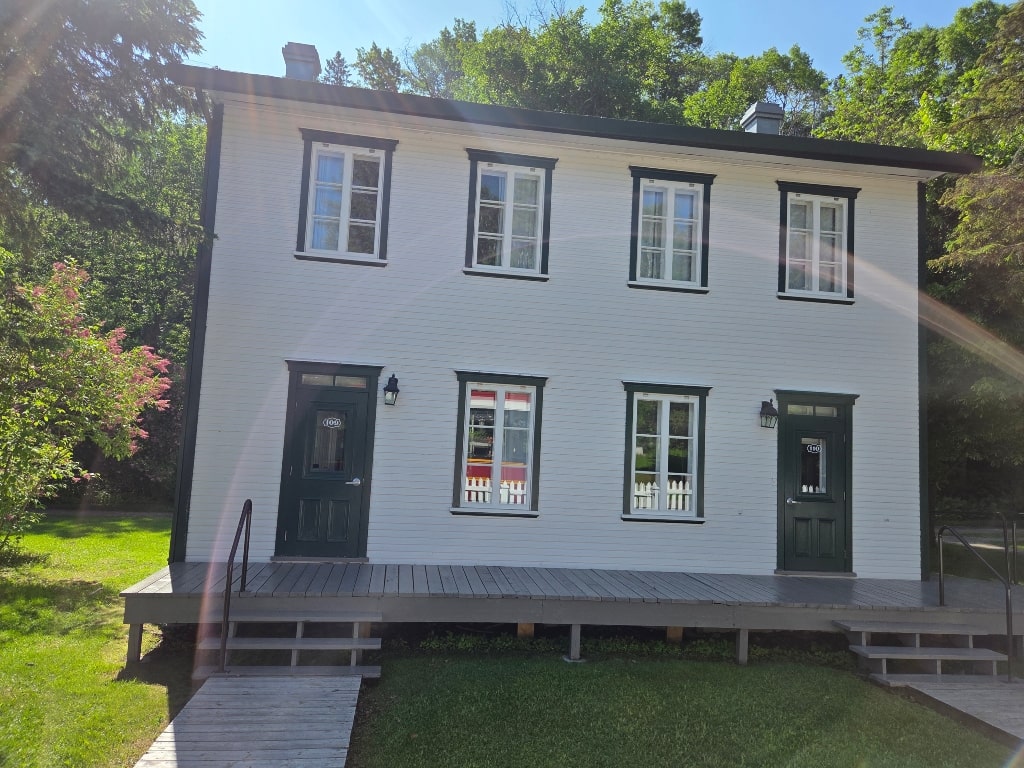
Village Historique de Val-Jalbert
I spent 2 nights at one of the cute restored accommodations in the Historic Village of Val-Jalbert, and it was great.
- Stay in a Real Ghost Town – Sleep in restored 1920s buildings within a historic village
- Modern Comfort – Rooms have A/C, private bathrooms, and Wi-Fi
- Built-in Attractions – Includes access to the falls, the mill, trolleybus village tours, and the cable car
- Great Food On-Site – Enjoy local cuisine at the highly rated Restaurant du Moulin
👉 Book your stay here: Village Historique de Val-Jalbert
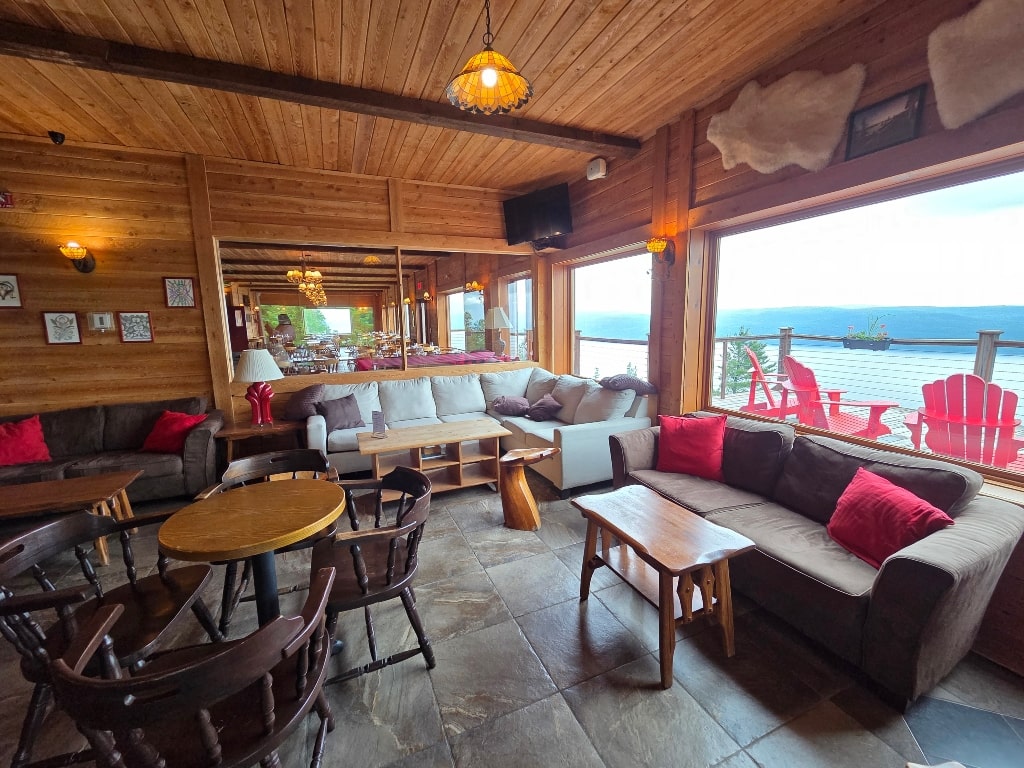
Auberge Cap au Leste
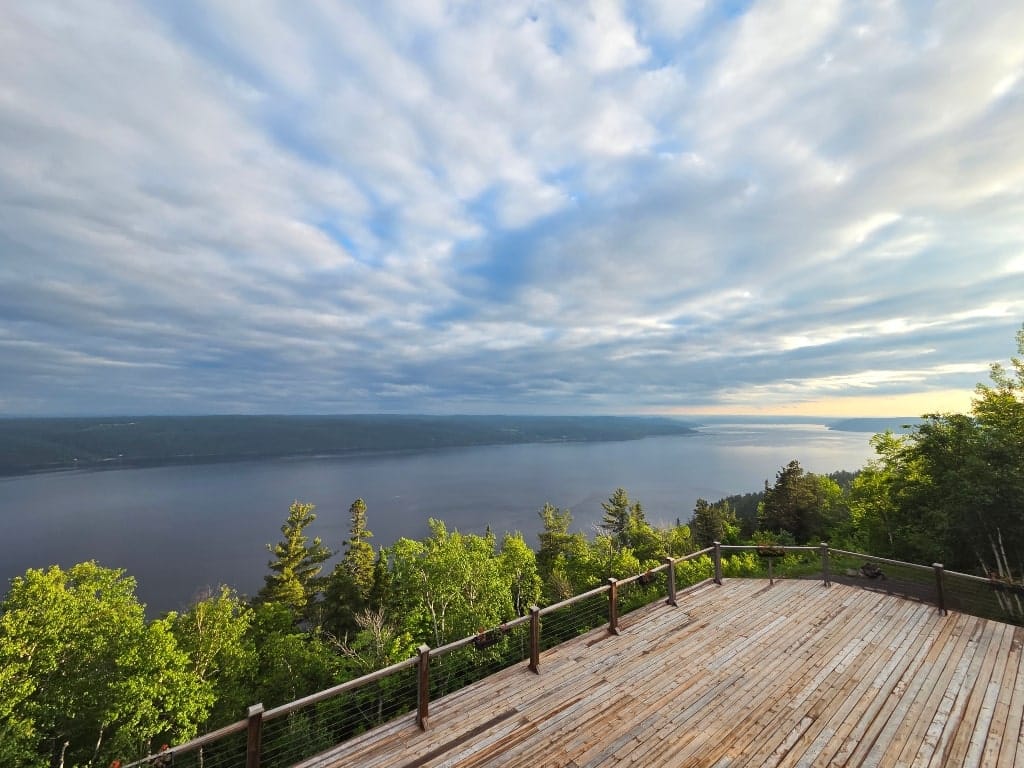
I spent 1 night in this lovely place. The view from the terrace is out of this world. Also, the sauna has the best view ever.
- Stunning Fjord Views – Perched on a cliff, this rustic lodge offers panoramic views of the Saguenay Fjord
- Chalet-Style Rooms – Cozy wooden rooms with a Scandinavian vibe, many with balconies overlooking the water
- On-Site Dining & Wellness – Includes a restaurant with local cuisine, a sauna, and a pool with a view
- Outdoor Activities – Guests can hike, canoe, or simply relax in the natural surroundings
👉 Book your stay here: Auberge Cap au Leste
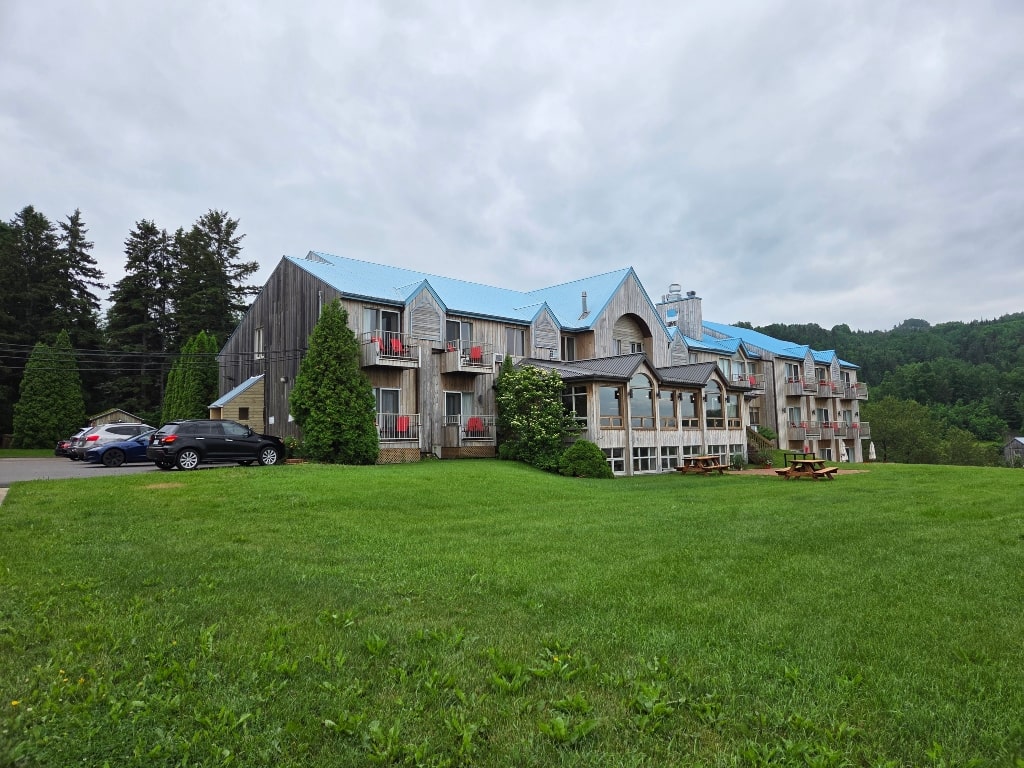
BATTURES Hotel Fjord Saguenay
I spent 1 night at Battures. This hotel is located on the shores of the fjord, so it has a totally different vibe.
- Peaceful Fjordside Location – Set along the Saguenay Fjord, the inn offers beautiful views and a tranquil setting surrounded by nature
- Comfortable, Classic Rooms – Rooms are spacious and well-equipped, many with views of the water or forest
- On-Site Restaurant – Features regional cuisine with fresh, local ingredients and a panoramic dining room
- Great for Relaxation or Business – Offers wellness services, conference facilities, and outdoor activities like hiking and wildlife watching
👉 Book your stay here: BATTURES Hotel Fjord Saguenay
Essential Travel Tips For Saguenay-Lac-Saint-Jean
Below are some useful tips when visiting Saguenay-Lac-Saint-Jean:
- Bring Bug Repellent
Mosquitoes and black flies can be intense in summer, especially near lakes and forests—DEET-based sprays or natural repellents are a must. - Rent a Car
Public transport is limited. You’ll need a car to explore parks, villages, and scenic viewpoints comfortably. - Pack for Changing Weather
Weather can shift quickly—bring layers, a light rain jacket, and a warm hoodie even in summer.
- Book Whale-Watching Tours in Advance
If you’re visiting Tadoussac or the Saguenay–St. Lawrence Marine Park, book early—spots fill up fast in the summer. - Carry Cash
While most places accept cards, small markets, farms, or rural cafés may prefer cash.
- Bring a Reusable Water Bottle
Tap water is clean and drinkable. Stay hydrated while hiking or biking around.
- Wear Proper Footwear
Hiking trails can be rugged. Bring good trail shoes or hiking boots if you plan on outdoor adventures.
- Pack Snacks for the Road
Distances between towns can be long—stock up on snacks and fuel when you can.
👉 If you prefer drinking water through a filter, grab your LARQ Bottle. The Nano Zero Filter technology removes lead, heavy metals, chlorine, microplastics, and other particulates in the water.
🦄 Related Quebec blog posts:
13 Fun Things To Do In Quebec City For Adults
Why Is Quebec City So Famous? 10 Reasons Why You Need To Visit
12 Mistakes Visitors Make When Visiting Quebec City + Tips On How To Avoid Them
Is Quebec City A Walkable City? + Most Walkable Neighbourhoods
Is There Uber In Quebec City
How Safe Is Québec City For Tourists?
Top 15 FREE Things To Do In Quebec City
FAQs: Is Saguenay-Lac-Saint-Jean Worth Visiting?
Let’s take a look at some of the most frequently asked questions when it comes to whether Saguenay-Lac-Saint-Jean is worth visiting.
What language do they speak in the Saguenay-Lac-Saint-Jean region?
In the Saguenay-Lac-Saint-Jean region of Quebec, the primary language spoken is French.
Over 98% of the population speaks it as their first language, and it’s the language used in day-to-day life, signage, and most services.
English is spoken in some tourist-oriented areas. However, it’s not widely used outside those zones, so learning a few basic French phrases can be very helpful during your visit.
Also, you might hear Innu-aimun, the language of the Indigenous Innu people, especially in the community of Mashteuiatsh, although it’s much less common.
Can you drink the tap water in the Saguenay-Lac-Saint-Jean region of Quebec?
Yes, you can safely drink the tap water in the Saguenay-Lac-Saint-Jean region.
Like the rest of Quebec, the tap water there is clean, treated, and meets strict Canadian health and safety standards.
It’s not only safe but often of excellent quality, especially in smaller towns and natural areas where the water comes from pristine sources.
Bringing a reusable water bottle is a great idea, especially if you’re out hiking, biking, or exploring the national parks.
👉 If you prefer drinking water through a filter, grab your LARQ Bottle. The Nano Zero Filter technology removes lead, heavy metals, chlorine, microplastics, and other particulates in the water.
What is the main airport in the Saguenay-Lac-Saint-Jean region?
The main airport serving the Saguenay-Lac-Saint-Jean region is the Saguenay–Bagotville Airport (YBG).
Located near the borough of Bagotville in the city of Saguenay, it’s about a 10-minute drive from downtown Chicoutimi.
While it’s a smaller regional airport, it offers regular domestic flights, primarily connecting to Montreal-Trudeau International Airport (YUL).
That allows for easy connections to other Canadian and international destinations.
The airport is typically served by airlines like Air Canada and PAL Airlines.
Though limited in size and amenities, Saguenay–Bagotville Airport is a convenient and efficient entry point for travelers exploring this beautiful region of Quebec.
What is the biggest city in the Saguenay-Lac-Saint-Jean region of Quebec?
The largest city in the Saguenay-Lac-Saint-Jean region is Saguenay.
It was formed in 2002 through the merger of several smaller municipalities, including Chicoutimi, Jonquière, La Baie, and a few others.
Today, Saguenay has a population of around 145,000 people, making it the urban and economic center of the region.
The city is known for its blend of natural beauty and cultural attractions. Offering easy access to the Saguenay Fjord, museums, festivals, and outdoor activities year-round.
Also, it’s where you’ll find the region’s main airport (YBG), shopping areas, and a variety of dining options.
Conclusion: Is The Saguenay-Lac-Saint-Jean Region Of Quebec Worth Visiting?
In conclusion, the Saguenay-Lac-Saint-Jean region of Quebec is absolutely worth visiting.
With its breathtaking fjords, charming lakeside towns, rich Indigenous culture, and endless outdoor adventures, the region offers something for every type of traveler.
Whether you’re hiking dramatic trails, tasting wild blueberry treats, spotting beluga whales, or cycling the scenic Véloroute des Bleuets, you’ll be surrounded by natural beauty and warm, small-town hospitality.
It’s a destination that combines adventure, culture, and tranquility, making it one of Quebec’s hidden gems waiting to be explored.